
Parent Response: Mealtimes Matter
I SAY ADD in PLAY!

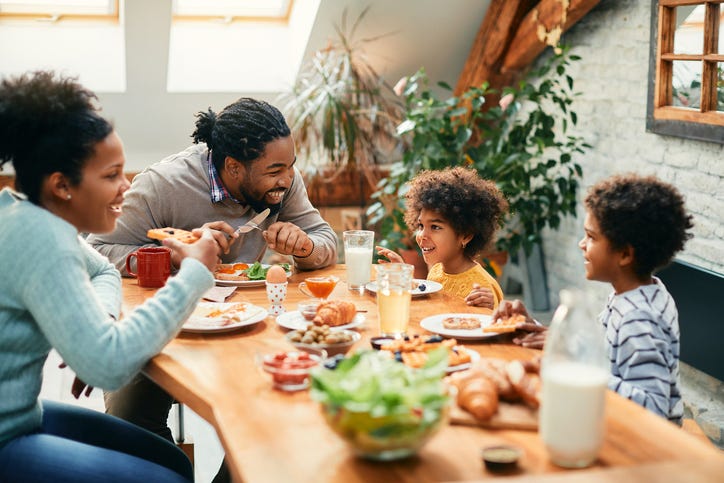
If you’ve read my post Mealtimes Matter (Part 1) , you might be curious to find out how it went when I shared these ideas with a real-life Child in Bloom family…
Coming together to be silly, joyful, and playful gives us the chance to break down walls and allows us to think or act like a child. Relax into your dinner time by adding a little fun. By playing with our children (I mean really playing, not just going to their sporting events), we get a moment to see things from their perspective. You will see that many skills can be taught to them through these tiny moments of fun. The goal is to weave playfulness across your parenting, and mealtime is a great place to start.
I recently worked with a family who was struggling to get their son to come to the table, let alone eat anything when he got there. The parents had resolved that their son just wasn’t going to be a good eater, and so they had pretty much given up on expecting him to come to the table.
I simply asked them on our first meeting, Is this what you want for your family? Or would you prefer to have him join you at the table? Of course, they answered that they dreamed of having dinners around the table, but their son just didn’t have the attention or interest in it.
So I asked them what he WAS interested in? They said all kinds of things he loved to play, and of course, none of those things revolved around the healthy food that was on his dinner plate. So, I said, “Let’s bring some of those fun things to the table and tie the access to them to his progress on eating and joining the family in more functional ways”.
The initial goal was not to get him to be an excellent eater or attentive for a full mealtime, but instead to get him to come to the dinner table.
Even if he came to the table just to see his favorite Legos, that was a win. Then we tied the need for food to the Legos, so that he might alternate between food and fun.
Two things would happen with this new approach.
Parents could release their overboard expectations where they were hyper-focused on healthy food and staying at the table.
Parents could showcase how they loved having him at the table and enjoyed his company while they sat together, engaging in the things he loved.
Yes, of course, we’d be constantly trying to weave in the eating of food.
Taking the focus off the food and placing it on the fun changed the outcomes for everyone. Suddenly, dinner time was enjoyable, and the power struggles discontinued. Now, of course, this little guy is not going to expect that Legos are on all tables. He will one day go off to college, and I promised his parents that I highly doubt he would be bringing these Legos to the university cafeteria. This was just something to get us through this little bump and help him see himself as someone who enjoys dinner, so that he would show up more regularly.
Playtime offers us a chance to foster sportsmanship (how to win and lose with grace). It also gives us an opportunity to help our children learn how to wait, take turns, problem solve, and plan. Dinner time conversations do the same, so weave in some silly and fun ways to converse or interact at the dinner table, and you might also weave in some bonds of family that are strong and tight based on the mealtimes that matter to everyone at the table.
Self-esteem and taking risks are integral to playtime, and creative juices always flow when we step into the realm of play. So, get silly and joyful with your kids: dress up for dinner (everyone wears a silly hat one night, change it up, and laugh a little while you spend quality time together over dinner). You’ll see your family bloom when you incorporate well-planned or even spontaneous positive playtime experiences.
Here are even more tactics to make mealtimes more meaningful…
DRAW it OUT: Allow kids to eat the Rainbow (bring coloring pages that feature a rainbow to the table, and add a color to the rainbow each time they eat something that matches one of the colors).
Busy Busters: If your busy life with kids causes you to miss a meal, make it up the next morning by adding in a breakfast special treat together. Like donuts on the way to school, where you pause in the car and eat and chat together before the day begins, or a pancake and sausage feast the next day (one of my favorite all time teachers told me she used this strategy with her girls when they were busy with sports practices and the family dinner went by the wayside. It’s normal for us to miss a meal or two here and there, but don’t make it a regular habit without filling in for these misses with new and inventive ways to connect and commune with your kids.
Progress for Picky Kids: I once had a client whose son would only eat foods that were white, and as you can imagine, this was limiting his access to healthy foods. Mom, who was a health coach, was not exactly excited about this, so she was adding in lots of pressure to make mealtimes happen and in healthy ways, but she was having no luck. In fact, she was creating more stress around mealtimes, and the little guy was holding tight and, honestly, winning the battle.
I asked the mom to release the rope and allow him to eat whatever he wanted, just so we could get him to the table. This reboot allowed the family to reconnect and welcome him without the pressure, and he was eating white bread, bananas, and yogurt (not the worst foods), but at least he was at the table—a WIN! The mom ended up encouraging him to eat SUPERMAN food (blueberries and carrots) when he was going down the slide outside or when walking his sister to school. These first steps connected to what he was interested in (superheroes) encouraged him to take a bite, and his mom began to incorporate these foods into the food on his dinner plate. Soon, he wouldn’t come to the table unless he could eat Superman food with his yogurt!
Manners Matter at Mealtime:
Teach your kids the following key phrases and encourage them to use them when sitting and interacting with family members at the table:
Pardon Me - Have your kids use this old-fashioned phrase to help them apologize for minor acts of rudeness that might occur at the dinner table. They might also say it when they are asking you to repeat something you have said that they missed or misunderstood. You could teach this phrase to your kids, model or draw out how and when to use it, and then have them practice it at the table the next time.
I Appreciate You - Have your children use this phrase to help show when they really are grateful for something that someone else has done for them. It is great for them to learn to say this to Dad after he has cooked a scrumptious meal, or Mom when she has worked all day, before mealtime. By saying this important phrase to your kids regularly, you will help them see it as a regular way to connect to family members. Teach them about the phrase, model it, or draw it out, and post it so that they can even just point to it. You could even come up with a form of sign language that signifies appreciation, so they can express it without speaking aloud. Allow them to practice by trying to say it to someone in the family or their life at least once a week.
No, Thank You - Instead of allowing kids to complain or even worse, engaging in negotiations about their complaints, encourage them to have go-to phrases that are functional and polite when they simply would prefer not to eat something on their plate. Learning to say ‘No, Thank You’ can be life-changing for a child. They can use this phrase in so many places across their life, but starting at the dinner table.
Encourage Glass Half-Full Speaking- Your kids may tend to spout off about the things on their plate they don’t like. Doing this to you is one thing, but your job as a parent is to prepare them for the outside world, where others will be less forgiving. So, instead of allowing them to complain openly, help them practice focusing on the positive, and encourage them to speak in glass-half-full terms at our table. That means they can say anything about what is on their plate as long as it is a “half-full comment” and focused on a positive. If they don’t like the rosemary-cooked carrots on their plate, but they can tolerate the biscuit with apple butter, they can say, “Mom, I love this biscuit with apple butter.” They don’t have to mention the negative comment because that would not be polite. Of course, they may still think negatively about the carrots and struggle to take a few bites of them, but they won’t ruin the meal by complaining, and you won’t allow it to go on and on by entertaining the complaining.
Placing the seeds of growth around these phrases early on can lead to a lifetime of positive interactions for them later. There are many other ways to instill politeness with your kids at the dinner table. One of them is not using suggestions to get them to complete the given tasks around dinner time.
Avoid saying things like…
Would you like to please eat your meatloaf?
It’s time to eat your fruit, okay?
Come to the table, alright?
Will you please push your chair in when you are finished?
Instead of instilling politeness this type of suggestion or questioning phrase instills confusion and entitlement which makes them feel they have the option to opt out of these requests.
Consider this: do I want them to have the option to opt out? Or is it something they really need to do. If it is the latter then take out any extra phrasing that makes your request turn into a suggestion. In this situation the words that need to be omitted are often the ones that pose as politeness… please?, alright?, and okay?
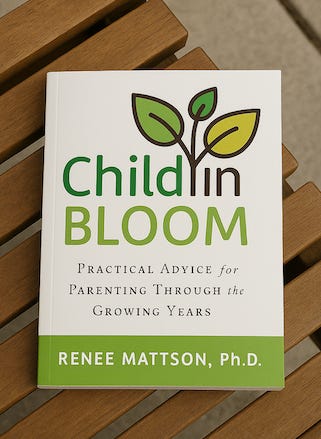
For more small parenting shifts that create big changes in kids’ lives, order my book: Child in Bloom: Practical Advice for Parenting Through the Growing Years
Who wrote this?
I am Dr. Renee Mattson, a licensed intervention specialist with 30+ years of experience presenting and coaching in schools, homes, & university settings. All my knowledge and wisdom is in my book: Child in Bloom: Practical Advice for Parenting Through the Growing Years. I know 1st hand that small shifts in adult behavior can lead to big, lasting changes in kids, which is what this newsletter is about—sharing small parenting shifts that create big changes in kids. Read more.